

How to keep your dog still at the vets
Do you want to learn how to keep your dog still for examinations and procedures? Find out how with our top tips.

Your vet needs to be able to examine your dog’s body in detail to understand the cause of illness or injury and prescribe the right treatment. And lots of procedures, like ultrasound scanning and blood sampling, will be much easier if dogs are comfortable being held still.
We can’t explain to our dogs what’s going to happen to them and why, so dogs who aren’t used to being restrained could become worried, frustrated, or excited by the experience. Help your dog by teaching them that being held still can be a positive experience, way before they ever need to be restrained for real.
At the vet clinic, your vet is likely to ask a nurse or suitably trained colleague to help restrain your dog. This isn’t personal. They are used to doing these procedures together effectively. But this training is still important for your dog to cope with the situation. Tell your vet about the training you’ve done, and which words you use to tell your dog what is about to happen, so they can use the same ones. You can talk to your dog throughout to help reassure them about what’s happening and have your treats ready to distract and reward them.
Top tips for training your dog to feel comfortable being restrained
- Prepare yourself first. Practise getting into position without your dog. Sounds silly, but this prepares you for moving your body and managing your dog and their treats at the same time. Being well-rehearsed helps your movements flow better, so you’ll feel confident when you start teaching your dog.
- Keep training sessions short and fun. Spreading short training sessions over the day means you’ll be able to teach a lot without putting your dog under pressure. Finishing with a game also rewards their effort and can strengthen your bond. You don’t need to do all the steps during each training session. It can be tempting to rush through, especially if your dog appears to be doing well, but taking things gently means you and your dog can feel confident all the way.
- Think of each short training session as laying foundations for the next. Carefully introduce touching their ears, tail, and feet. Always keep it brief and give them treats straight afterwards.
- Think of each short training session as laying foundations for the next. Carefully introduce touching their ears, tail, and feet. Always keep it brief and give them treats straight afterwards.
- Watch your dog’s body language and make sure they aren’t uncomfortable or stressed. Find out more about understanding dog body language.
- Dogs can feel especially vulnerable when having their paws and tail examined because it means they’re less able to move away if they want to. Treat these areas with caution. Run your hands gently down your dog’s legs, so they know you’re heading to their paws and it isn’t a shock suddenly having these touched.
- If you’re looking underneath their paws, always lift their legs so that they bend naturally. You don’t want to accidentally hurt them.
- Be patient. If your dog is struggling, go back to a stage at which they were comfortable and practise for a little bit longer, before moving on again. Some dogs might need to go slower than others. It takes a lot of trust for your dog to be restrained, so the time you spend gradually working through these steps will pay off. If your dog growls, squeals, snaps or bites, or tries to avoid you or hides away, you might need extra help. It is worth talking to your vet about different options like seeking professional behavioural support.
- Teach your dog that new things like ear or eye drops, tablets or flea treatments can be linked to good things happening. Ask your vet for an empty ear or eye drop bottle or a used flea treatment tube. Start by casually carrying it around, while giving your dog a treat with the other hand.
- Your dog needs to get used to you holding the medicine without the need for alarm. Gradually build on this until you can hold it out towards your dog and slowly progress to touching them briefly with it.
Teaching your dog to be held still for veterinary examination
- 1
Create a cue
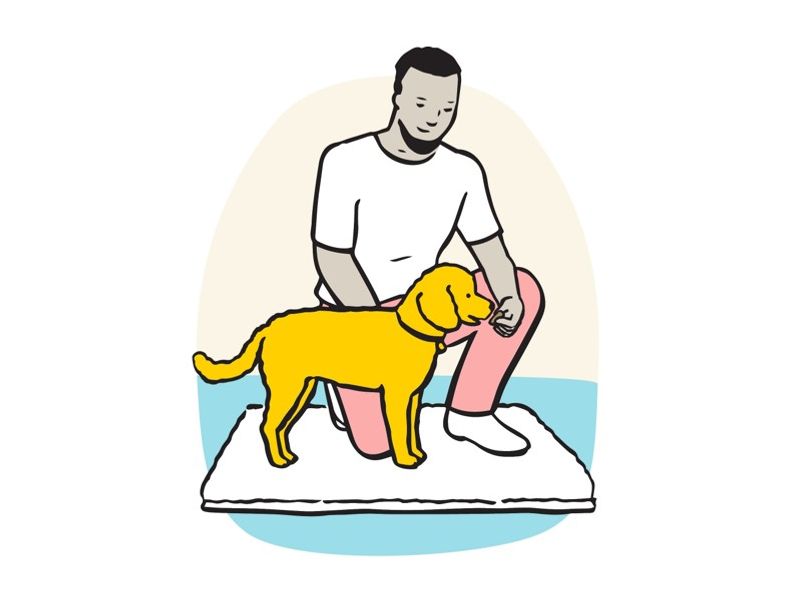
Use a tasty treat to guide your dog to stand sideways in front of you on a non-slip surface such as a bath mat. It might be necessary to crouch down, so make sure that your weight is evenly balanced. Add a consistent word or phrase, like “stand still”, to help your dog learn...
Show detailsUse a tasty treat to guide your dog to stand sideways in front of you on a non-slip surface such as a bath mat. It might be necessary to crouch down, so make sure that your weight is evenly balanced. Add a consistent word or phrase, like “stand still”, to help your dog learn to expect what follows. Just before you guide your dog into position, say your chosen phrase. Make sure you use the same phrase every time. Reward your dog with the treat.
- 2
Get them comfortable with the position
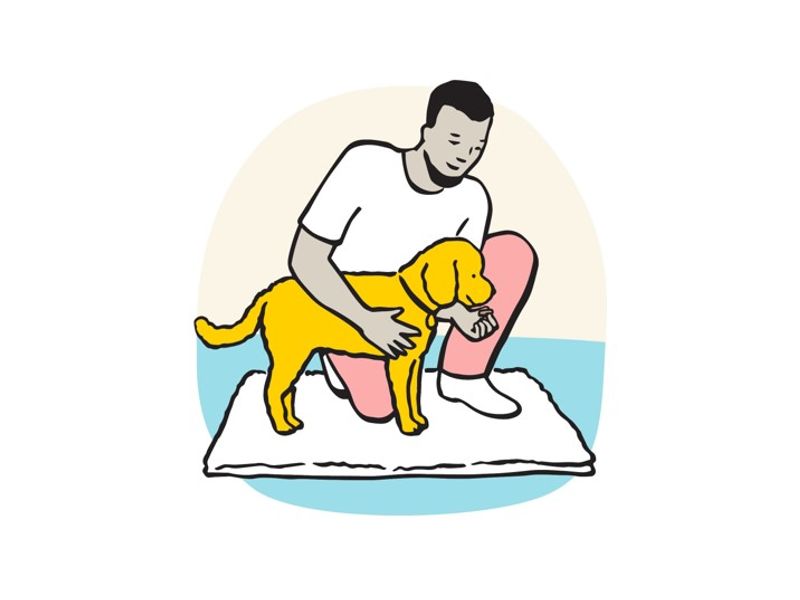
Repeat and get your dog to stand for a bit longer before giving them the treats. You can also use your body to help steady and support your dog by moving close to them, so your bodies are lightly touching. If they choose to move away, just let them go, return to a stage at...
Show detailsRepeat and get your dog to stand for a bit longer before giving them the treats. You can also use your body to help steady and support your dog by moving close to them, so your bodies are lightly touching. If they choose to move away, just let them go, return to a stage at which they were able to stay still, and practise that for a bit longer to build their confidence.
- 3
Introduce the next step
This time, repeat but slide your hand underneath your dog’s stomach and upwards, gently stroking along their outer side for a moment. Give a treat, then toss another for them to chase and enjoy. If your dog is comfortable, they should return. If they choose not to, have a...
Show detailsThis time, repeat but slide your hand underneath your dog’s stomach and upwards, gently stroking along their outer side for a moment. Give a treat, then toss another for them to chase and enjoy. If your dog is comfortable, they should return. If they choose not to, have a break, and try again later.
- 4
Properly position your hands
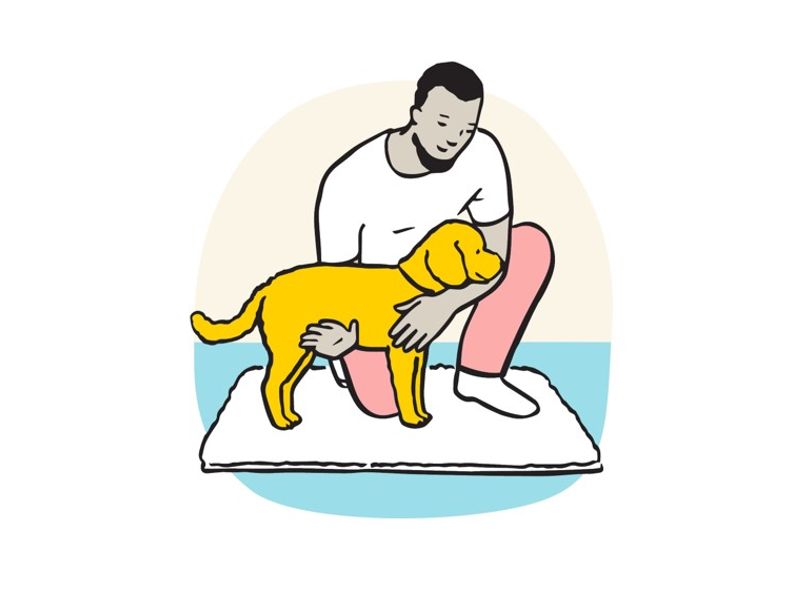
Guide your dog into position using a treat, and give it to them once they’re standing still. Say your chosen phrase, then slide one hand under their stomach as before with your palm facing outwards (this helps you avoid grabbing your dog if they do suddenly move). Place your...
Show detailsGuide your dog into position using a treat, and give it to them once they’re standing still. Say your chosen phrase, then slide one hand under their stomach as before with your palm facing outwards (this helps you avoid grabbing your dog if they do suddenly move). Place your other hand on the front of their chest, stroking gently for just a moment, then give them treats and praise.
- 5
Eat, sleep, train, repeat
Repeat, gradually building up the length of time you rest your hand on your dog’s chest for before giving the treats. Repeat, but this time, slide your front arm all the way across their chest and around their neck to gently stroke behind each ear. Just do this for a moment...
Show detailsRepeat, gradually building up the length of time you rest your hand on your dog’s chest for before giving the treats. Repeat, but this time, slide your front arm all the way across their chest and around their neck to gently stroke behind each ear. Just do this for a moment to begin with, following up with treats as usual.
Repeat, gradually holding your dog for longer and longer each time, before releasing them and giving treats.


Restraining your dog for blood collection
Only attempt this when you have mastered restraining your dog for veterinary examination.
- 1
For blood collection on your dogs front leg
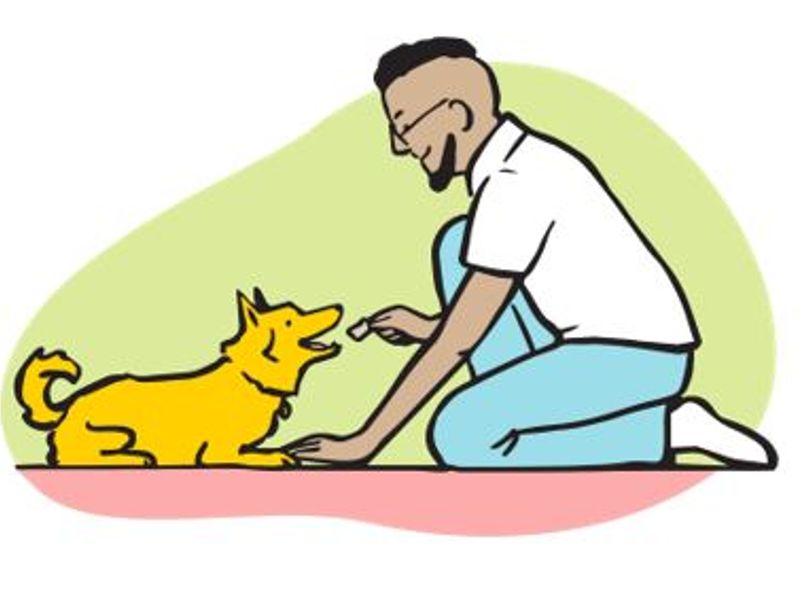
Use a treat to guide your dog to sit sideways in front of you on a non-slip surface. It might be necessary to crouch down, so make sure that your weight is evenly balanced. Reward your dog with the treat.
Repeat and get your dog to sit for a bit longer before giving...
Show detailsUse a treat to guide your dog to sit sideways in front of you on a non-slip surface. It might be necessary to crouch down, so make sure that your weight is evenly balanced. Reward your dog with the treat.
Repeat and get your dog to sit for a bit longer before giving them the treats.
- 2
Get them used to being handled
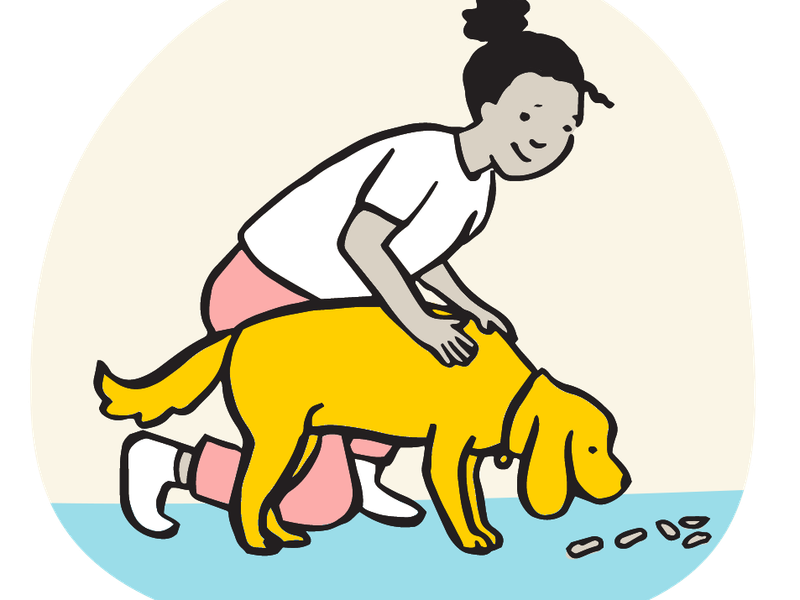
Before giving your dog their treat, slide your arm gently around their back and the outside of their body to stroke their outside shoulder or thigh — whatever’s comfortable and offers more support. Now give them their treat, then toss another for them to chase and enjoy. If...
Show detailsBefore giving your dog their treat, slide your arm gently around their back and the outside of their body to stroke their outside shoulder or thigh — whatever’s comfortable and offers more support. Now give them their treat, then toss another for them to chase and enjoy. If your dog is comfortable, they should return. If they don’t return, have a break and try again later. Repeat this several times.
- 3
Introduce the leg touch
Guide your dog into the sitting position as before. This time, say a different cue phrase, like “leg out”, just before you slide your hand around them and touch their elbow for a few moments. Give your dog their treat, then toss another out for them to chase and enjoy. Repeat...
Show detailsGuide your dog into the sitting position as before. This time, say a different cue phrase, like “leg out”, just before you slide your hand around them and touch their elbow for a few moments. Give your dog their treat, then toss another out for them to chase and enjoy. Repeat this several times.
- 4
Elbow positioning
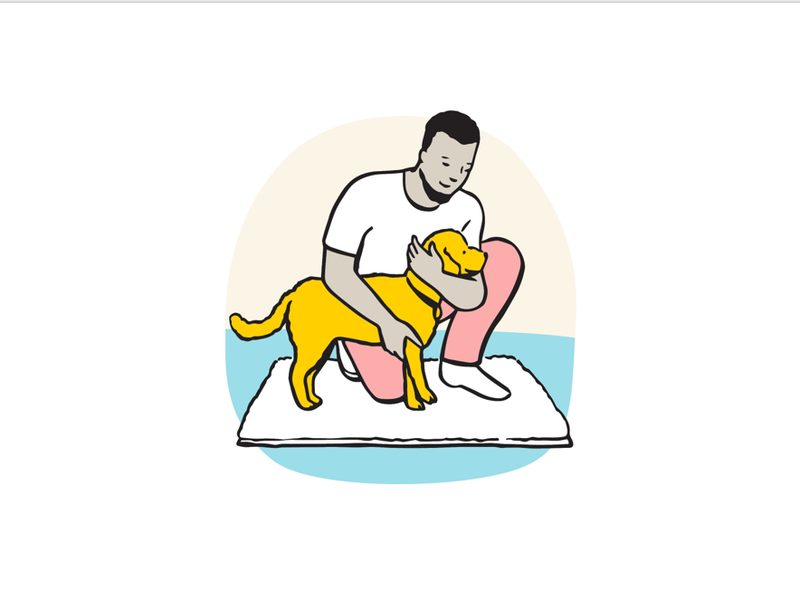
Guide your dog into the sitting position as before. Say “leg out” and place the length of your outer arm across your dog’s side and your outside hand just behind the top of their elbow. The crook of their elbow should rest between your thumb and forefinger. Steadying your...
Show detailsGuide your dog into the sitting position as before. Say “leg out” and place the length of your outer arm across your dog’s side and your outside hand just behind the top of their elbow. The crook of their elbow should rest between your thumb and forefinger. Steadying your dog’s foreleg by placing your hand just behind their elbow will help the vet locate the vein running down their foreleg. Slide your other arm around gently in front of the chest. Rest here for a moment then give your dog their treats as usual.
Gradually build up the time you rest with your arms around your dog and hand behind their elbow, always following with treats.
- 5
Restraining your dog for blood collection from their neck
Only attempt this when you have mastered restraining your dog for veterinary examination.
Follow steps one and two from the guide above. Guide your dog into the sitting position as before. Say a different cue phrase, like “neck up”, and slide one arm...
Show detailsOnly attempt this when you have mastered restraining your dog for veterinary examination.
Follow steps one and two from the guide above. Guide your dog into the sitting position as before. Say a different cue phrase, like “neck up”, and slide one arm around their back, just for a moment to begin with, and then give their treats as usual.
- 6
Introduce restraining with your arm
Guide your dog into the sitting position as before. Say “neck up” and slide one arm around their back, but this time, slide your front arm all the way around their chest and neck. Just do this for a moment to begin with, then give their treats as usual.
Gradually begin...
Show detailsGuide your dog into the sitting position as before. Say “neck up” and slide one arm around their back, but this time, slide your front arm all the way around their chest and neck. Just do this for a moment to begin with, then give their treats as usual.
Gradually begin to rest your hands in place for a bit longer before releasing your dog and giving their treats.
- 7
Tilt their head up
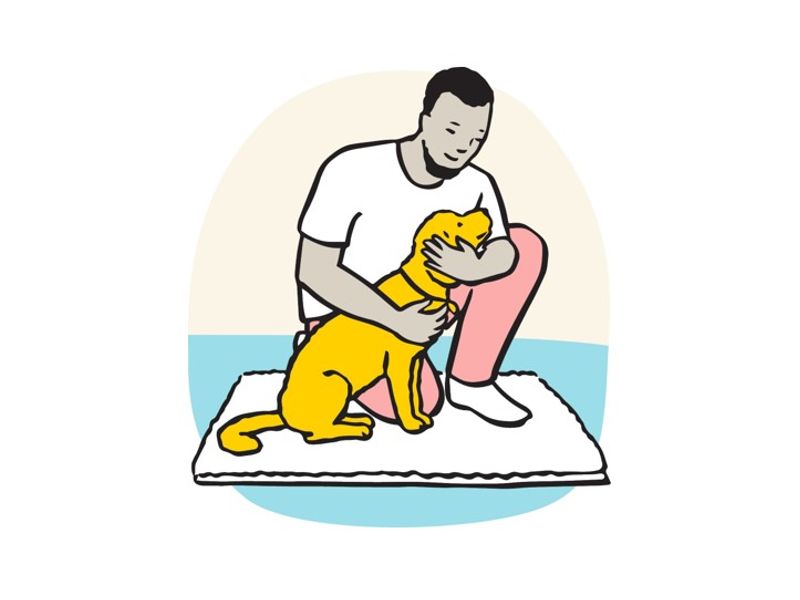
Guide your dog into the sitting position as before. Say “neck up” and slide one arm around their back while sliding your front arm all the way around their chest and neck. Now, gently tilt your front arm upwards so your dog’s head tilts backwards and their nose points...
Show detailsGuide your dog into the sitting position as before. Say “neck up” and slide one arm around their back while sliding your front arm all the way around their chest and neck. Now, gently tilt your front arm upwards so your dog’s head tilts backwards and their nose points upwards. Rest here for a very brief moment, then relax and give your dog their treats as usual.
Gradually build up the time you rest with one arm around your dog’s back while the other arm gently tilts their head back to expose their neck area. Always follow with treats.


Related articles

How to properly pick up your dog

How to perform a health check on your dog
