

How to train your dog to travel in the car
Want to drive your pooch to new places? Here’s how to keep things safe as you take to the road.

Car travel is an important part of life for many dogs as it enables them to explore new and exciting places. But if you don’t follow good advice it can lead to stress, anxiety and even a visit to the vet – not so exciting.
It’s important to make sure dogs are always safe and feel confident when travelling in the car, regardless of where they might be going. Whether you’re bringing a puppy home in a car for the first time or looking for advice on travelling with your dog, we have all the expert advice you’ll need to be happy and safe on the road.
Dogs should never be left unattended in your car at any time of year, even for short periods. So if you’re planning a trip with a stop, it’s better to leave them safely at home or bring someone with you who can take the dog out of the car on a leash while you complete your errands.
If you see another dog in a car who seems distressed or unwell, call the police on 999 straight away. In Northern Ireland, you can call the regional Animal Welfare Officer or the PSNI on 999.

Your guide to travelling happily with a dog in your car
Perhaps your pooch is nervous around cars – or it may be that they’re just unused to car travel. Either way, here’s a guide to creating a happy canine passenger.
- 1
Keep your dog secured in the car – it’s the law
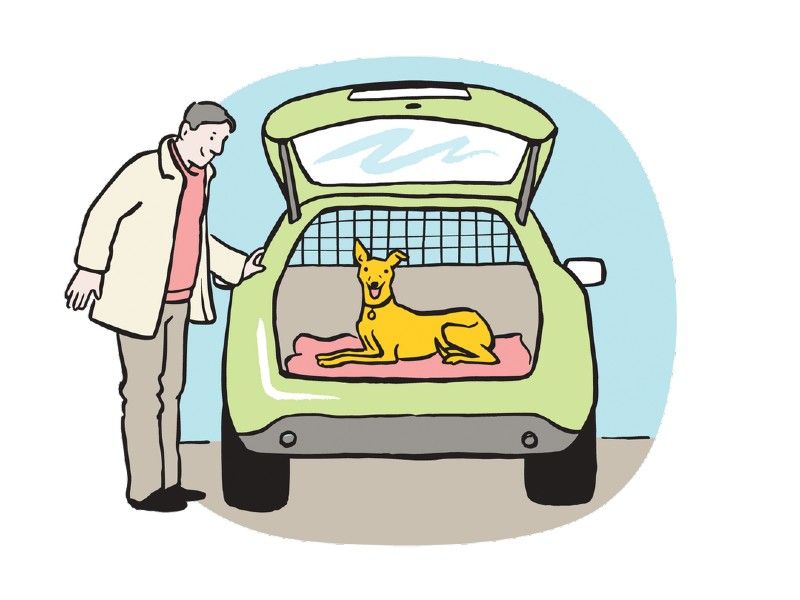
In the UK, the Highway Code stipulates that your dog should be suitably restrained when travelling in a car. Your dog or puppy should either be secured within the boot with a guard blocking access to the car passenger interior, or they should be in a securely-positioned crate...
Show detailsIn the UK, the Highway Code stipulates that your dog should be suitably restrained when travelling in a car. Your dog or puppy should either be secured within the boot with a guard blocking access to the car passenger interior, or they should be in a securely-positioned crate within the boot.
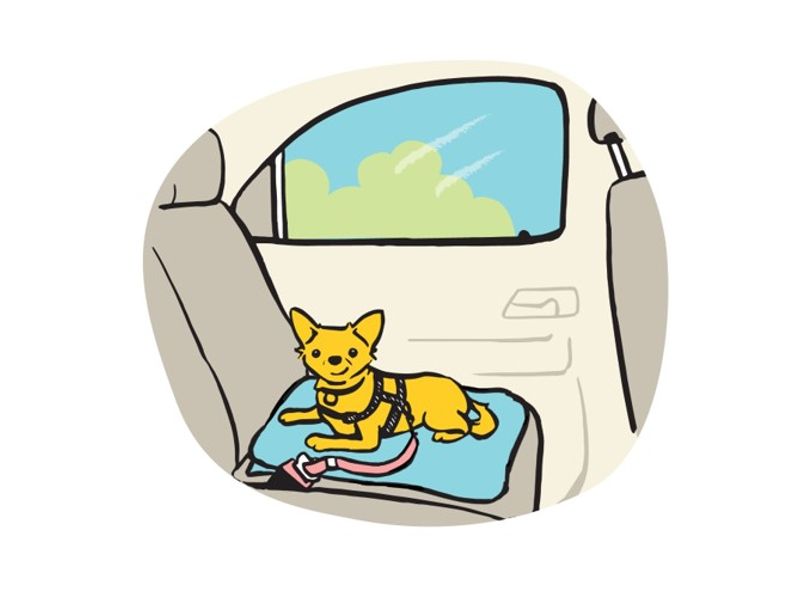
An alternative is a car harness for your dog. If you use one of these, ensure that it’s appropriately sized and correctly fitted. The dog should travel on the back seat and the harness should be secured to the seat belt attachment – this will stop your dog from interfering with the driver in transit or hanging their head out the window.
Never leave your dog alone in the car and keep them as cool as possible while travelling. You can use non-spill water bowls to help keep them hydrated, and plan in exercise and toilet breaks for longer trips.
- 2
Get your dog used to the car
Start by using your puppy or dog’s favourite special treats to reward them for being calm whenever they’re near the car, even just walking around the car can be helpful to begin with. Reward your dog for sitting calmly before you’re ready to open the door and invite them...
Show detailsStart by using your puppy or dog’s favourite special treats to reward them for being calm whenever they’re near the car, even just walking around the car can be helpful to begin with. Reward your dog for sitting calmly before you’re ready to open the door and invite them inside.
If your dog is tentative about getting into the car, place something that smells of you (or them) in with them. This could be a blanket, bed or pillowcases – as the smell of these can reassure them.
- 3
Gradually introduce your dog to travel
It’s important to introduce car travel to your puppy or dog carefully. For some dogs, the sensation might feel very unusual to begin with, especially if they’ve never been in a car before.
For example, they might be worried by the things they can see moving past the...
Show detailsIt’s important to introduce car travel to your puppy or dog carefully. For some dogs, the sensation might feel very unusual to begin with, especially if they’ve never been in a car before.
For example, they might be worried by the things they can see moving past the window or frustrated because they can’t get involved with them.
They’ll need to get used to the sound and movement of the car slowly, because it’s a lot for their senses to take in. If your dog is struggling with this, giving them a treat whenever the car starts up and begins to move. Then they’ll begin to associate these changes with good things happening.
- 4
Getting your dog in and out of the car safely
If your dog has travelled before and enjoyed it, they might be very excited about jumping into the car and out of it when you arrive at the park – but this isn’t a good idea as it can put them at risk of injury or accident.
Ask them to sit while you slowly open the...
Show detailsIf your dog has travelled before and enjoyed it, they might be very excited about jumping into the car and out of it when you arrive at the park – but this isn’t a good idea as it can put them at risk of injury or accident.
Ask them to sit while you slowly open the door and give them a few treats to keep them sitting as you do. If you do this every time you arrive at the car they’ll soon start to automatically sit and wait patiently before you guide them in safely and under your control.
Our doorways training page provides guidance for teaching a dog to pass through an open door while giving their owner full attention, and this teaching can be applied to the car door too.
Once they’re in, simply spend a little time sitting inside with them. Giving them a safe and long-lasting chew to enjoy can be a good way for them to learn the car is an enjoyable place to be.
Likewise, teach your dog to get out of the car calmly and quietly by slowly opening the door just a little way and waiting for your dog to sit or stay still before you invite them out. Always reward your dog for their patience with their favourite tasty treat.
- 5
Driving with your dog in the car
Start with short, slow and gentle journeys that will allow your dog to get used to car travel in a positive way. Having a friend, who your dog knows well and is comfortable with, accompanying you can be helpful so there is someone to be beside your dog if necessary while you...
Show detailsStart with short, slow and gentle journeys that will allow your dog to get used to car travel in a positive way. Having a friend, who your dog knows well and is comfortable with, accompanying you can be helpful so there is someone to be beside your dog if necessary while you are driving.
Drive smoothly allowing plenty of time for braking, as a jerky or uncomfortable journey might make your dog anxious or stressed.
- 6
What to do if your dog is anxious or frightened
If your dog is showing signs of being frightened about travelling in the car never force them to travel, as this is only going to make them even more worried, and they might feel trapped and panic.
Either find someone to stay with them when you need to travel, avoid...
Show detailsIf your dog is showing signs of being frightened about travelling in the car never force them to travel, as this is only going to make them even more worried, and they might feel trapped and panic.
Either find someone to stay with them when you need to travel, avoid the journey or make alternative travel plans if you can. Avoid car journeys completely while you seek the guidance of an experienced behaviourist.


Contact our behaviour services
Whether you’re facing a tricky behaviour or feeling completely overwhelmed, we’re here to help. Our team of experts can offer advice, training and support.
Call us on 0303 003 6666 or
Related articles

How to train your dog to be patient in doorways

Positive reinforcement – training with rewards
